Ricerca per:

Artificial Intelligence and Health: From Diagnosis to Drug Discovery

https://www.sifweb.org/sif-magazine/articolo/intelligenza-artificiale-e-salute-dalla-diagnosi-alla-scoperta-di-nuovi-farmaci-2025-03-27

Artificial Intelligence (AI) is a technology that allows computers to process huge amounts of data, recognize patterns, and make highly accurate predictions. Through advanced models such as machine learning and deep learning, AI systems can learn from data and continuously improve their performance. In medicine, this innovation is transforming the way diseases are diagnosed, monitored, and treated. AI is currently used to analyze medical images, clinical records, and scientific data, helping doctors detect abnormalities more accurately and predict the risk of certain diseases. This supports earlier interventions and more personalized treatments. Robotic surgery and remote patient monitoring are also benefiting from AI, making some procedures less invasive and improving long-term therapy management. In the pharmaceutical field, AI is speeding up drug discovery by rapidly analyzing large databases of chemical compounds and biological information. This makes it possible to identify promising molecules much faster than traditional methods and even discover new uses for existing drugs, a process known as “drug repurposing.” Some AI-assisted drugs are already undergoing clinical trials, while researchers are also using AI to identify new antibiotics against resistant bacteria.                                                                                          

An additional technical aspect, only briefly mentioned in the original text, is the use of artificial neural networks in medical AI. These systems are trained on extremely large datasets — for example thousands of X-rays, MRI scans, or patient records — and learn to recognize specific patterns associated with diseases. In medical imaging, this allows AI to detect small anomalies, such as tumors or early signs of neurological disorders, sometimes with a level of accuracy comparable to specialist physicians. AI is also playing a key role in the development of predictive and personalized medicine. By combining genetic information, clinical history, lifestyle factors, and laboratory results, AI systems can help predict how likely a patient is to develop certain diseases or respond to a specific treatment. This could lead to therapies that are increasingly tailored to the individual patient, improving effectiveness while reducing side effects and unnecessary treatments.

Despite its enormous potential, AI cannot replace doctors. Medical decision-making still depends on human experience, clinical interpretation, and empathy toward patients. Important challenges also remain, including data privacy, algorithm reliability, and legal responsibility in the event of diagnostic errors. For this reason, AI should be considered a powerful support tool for healthcare professionals rather than a substitute for human care.


AI as cognitive support for developers

A recent study by GitHub Next explores how artificial intelligence is reshaping modern software development workflows. The interviews revealed a clear distinction between repetitive, standardized tasks — such as boilerplate code generation, simple refactoring, or test generation — and high cognitive-load activities, including complex debugging, architectural design, contextual system analysis, and the evaluation of technical trade-offs. “We want AI to eliminate repetitive tasks by suggesting improvements, writing documentation or tests, and identifying issues… not to interrupt your creative flow or your autonomy.” Developers particularly value AI when it acts as a reasoning support layer: summarizing context, analyzing large codebases, suggesting implementation strategies, and generating actionable plans. At the same time, there remains a strong demand for human oversight in critical decisions and structural code changes, both to ensure reliability and to preserve understanding and control of the system. According to the study, the paradigm is evolving from a simple “AI assistant” toward a true “cognitive partner,” with tools increasingly designed to support problem solving, systems thinking, and complexity management. One particularly interesting finding is that most developers are not seeking full automation, but rather transparent, verifiable tools that can be integrated into code review, testing, and validation workflows. In the medium term, this shift could move the developer role toward skills more focused on software architecture, AI agent orchestration, and supervision of generative workflows.

Bill Gates nel suo blog sull’AI

Real Java Script code developing screen. Programing workflow abstract algorithm concept. Closeup of Java Script and HTML code.

Developing AI and AGI has been the great dream of the computing industry. For decades, the question was when computers would be better than humans at something other than making calculations. Now, with the arrival of machine learning and large amounts of computing power, sophisticated AIs are a reality and they will get better very fast.

https://www.gatesnotes.com/The-Age-of-AI-Has-Begun

CEPS – Lo studio della task force sull’AI e la Cyber Security – Maggio 2021

Fondato a Bruxelles nel 1983, il CEPS è uno dei principali think tank e forum per il dibattito sugli affari dell’UE, classificandosi tra i migliori think tank in Europa. https://www.ceps.eu/about-ceps/Al CEPS, i ricercatori svolgono ricerche politiche su un’ampia gamma di aree politiche: dall’economia e finanza a una migliore regolamentazione, economia digitale e commercio, nonché energia e clima, istruzione e innovazione, politica estera e processo di integrazione europea, o giustizia e affari interni.
Nell’autunno del 2019 il CEPS ha lanciato una Task Force sull’AI e la Cybersecurity con l’obiettivo di individuare gli aspetti principali tecnici, etici, di mercato e di governance che l’intersezione tra AI e Cybersecurity fa emergere. Lo studio allegato è il risultato dei due anni di incontri della Task Force e ritengo sia una base molto interessante per contestualizzare il perimetro di discussione attorno alla materia.

Qui potete scaricare lo studio completo che è veramente ben fatto:

https://www.ceps.eu/download/publication/?id=33262&pdf=CEPS-TFR-Artificial-Intelligence-and-Cybersecurity.pdf

Computer Vision

We see computer vision—or just “vision”; apologies to those who study human or animal vision—as an enterprise that uses statistical methods to disentangle data using models constructed with the aid of geometry, physics, and learning theory.

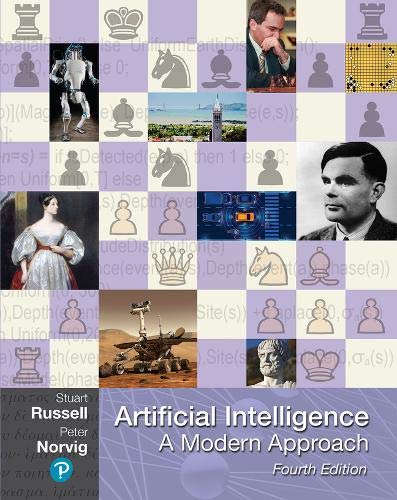
Stuart J. Russell and Peter Norvig, Artificial Intelligence: A Modern Approach

A classic in the literature on artificial intelligence, appreciated for its balanced and precise presentation and for the breadth and depth of content. This new edition reflects the changes that have emerged in the sector in recent years: in fact, there have been numerous scientific and technological advances in fields such as voice recognition, automatic translation, autonomous vehicles, home automation and information extraction from the Web. All topics, therefore, have been up-to-date and in-depth, from the types of knowledge representations an intelligent agent can use to planning, from data mining on the web to learning algorithms.

https://en.wikipedia.org/wiki/Artificial_Intelligence:_A_Modern_Approach

  • Part I: Artificial Intelligence – Sets the stage for the following sections by viewing AI systems as intelligent agents that can decide what actions to take and when to take them.
  • Part II: Problem-solving – Focuses on methods for deciding what action to take when needing to think several steps ahead such as playing a game of chess.
  • Part III: Knowledge and reasoning – Discusses ways to represent knowledge about the intelligent agents’ environment and how to reason logically with that knowledge.
  • Part IV: Uncertain knowledge and reasoning – This section is analogous to Parts III, but deals with reasoning and decision-making in the presence of uncertainty in the environment.
  • Part V: Learning – Describes ways for generating knowledge required by the decision-making components and introduces a new component: the artificial neural network
  • Part VI: Communicating, perceiving, and acting – Concentrates on ways an intelligent agent can perceive its environment whether by touch or vision.
  • Part VII: Conclusions – Considers the past and future of AI by discussing what AI really is and why it has succeeded to some degree. Also discusses the views of those philosophers who believe that AI can never succeed.